Biocontrol of Tropical Fire Ants
2026-08-10 | 2026-08-15
Estimated Reading Time: 14 minutes
Background
I am an engineer by profession—and a hobbyist gardener by choice—living in Coimbatore in Tamil Nadu, India. I have been growing vegetables in my home garden for about sixteen years, and, for the last decade, have been careful to use only organic fertilizers and pest control measures. In this blog I recount my experiences in countering tropical fire ants in my garden, aided by AI.
The tropical fire ant Solenopsis geminata1
Tropical fire ants or Solenopsis geminata are a highly aggressive and invasive pest [1–6]. Ants are usually found on plants as protectors of sap-sucking insects like aphids. But the tropical fire ant can also cause direct and severe damage to plants. Even if the aphids are controlled, the persistent fire ants will start chewing through the tender stems, shoots, and roots of plants like brinjal, okra, snake-gourd, and even mustard greens, as shown in Figures 1,2.
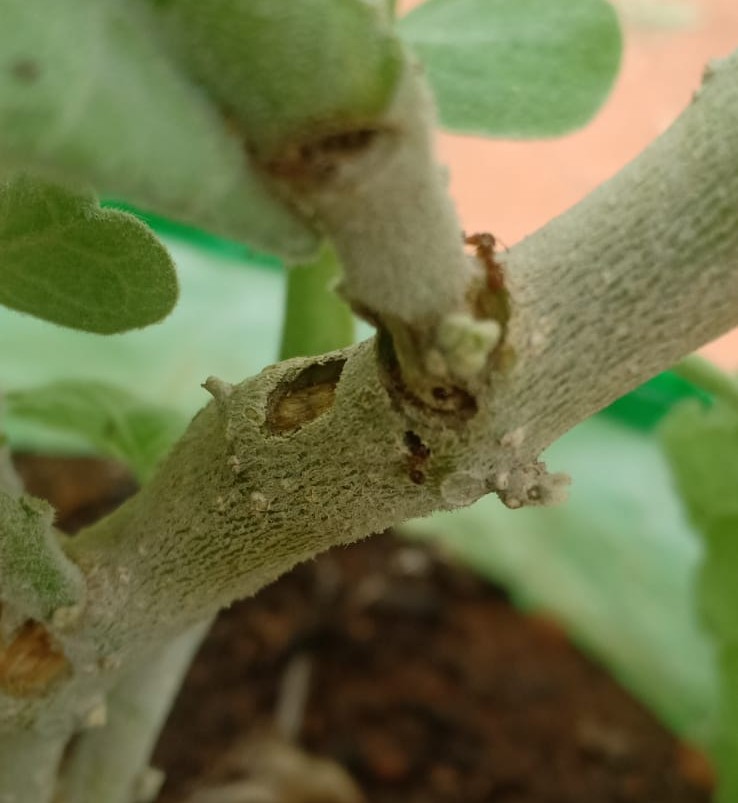
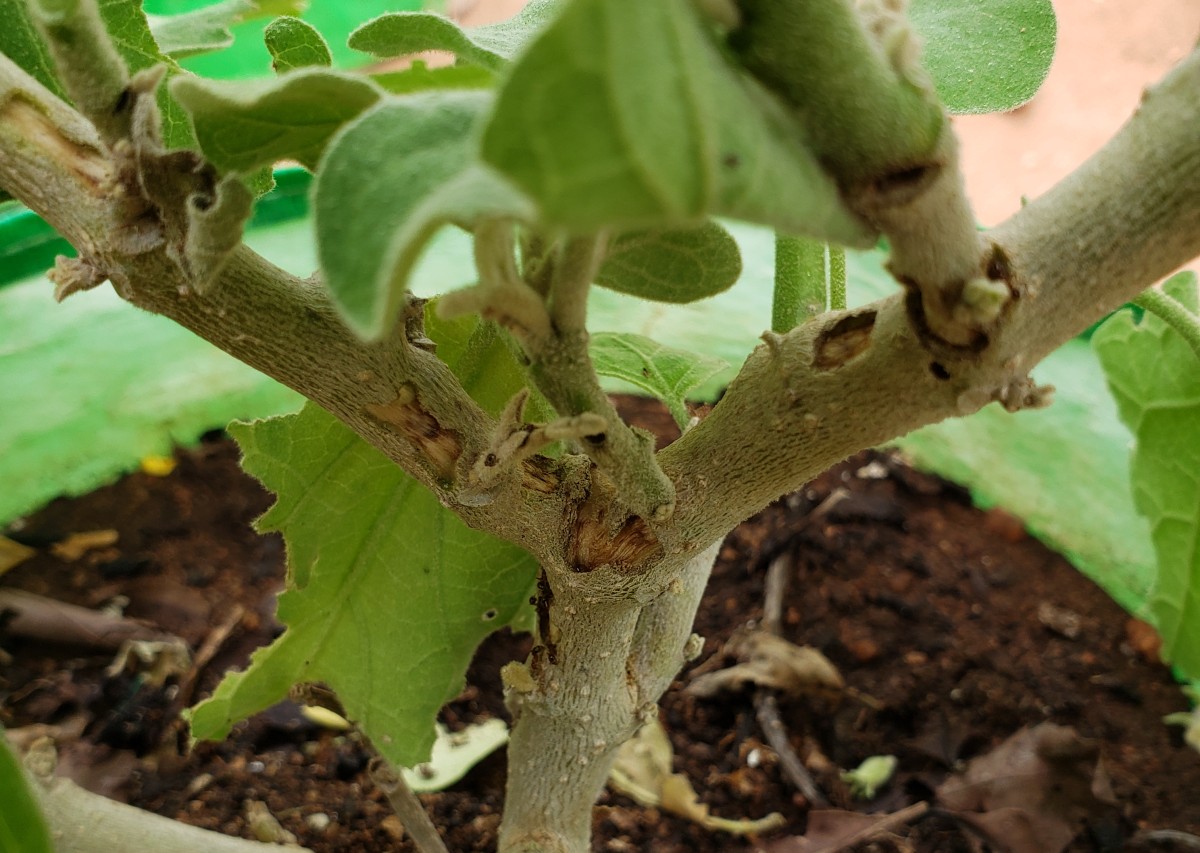
The affected plants will suffer visible damage and wilt; the hardier ones will recover, but the others will become unproductive or die.
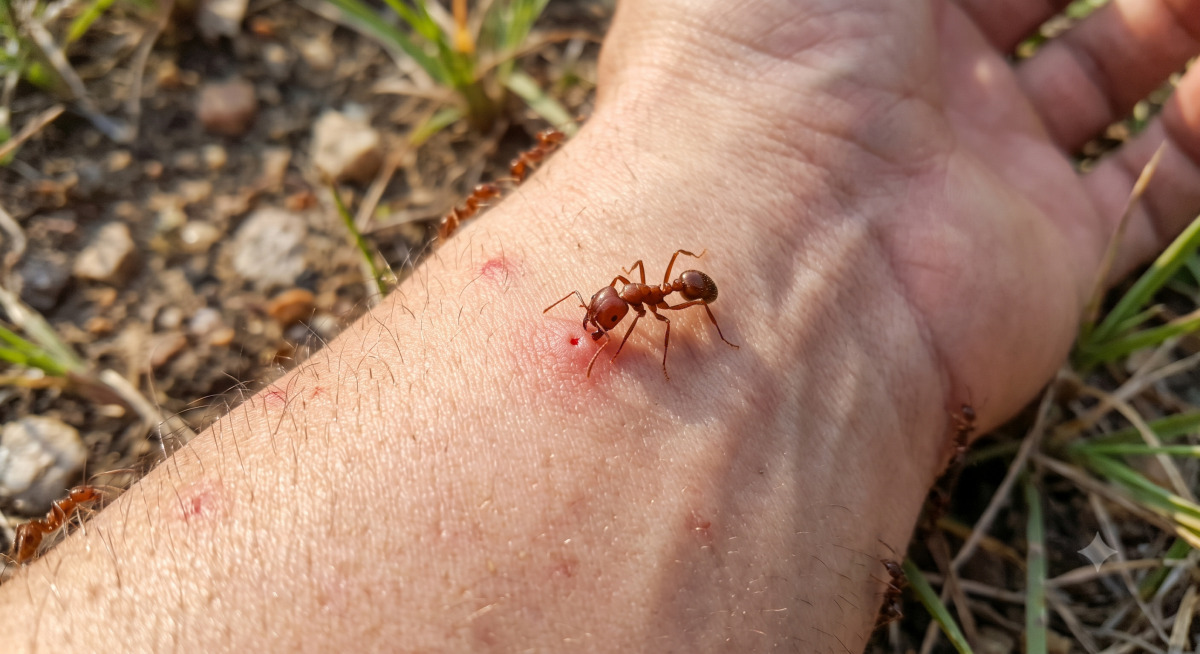
The ant’s bite can be quite painful, and one member of my family suffers an allergic reaction if bitten. Figure 3 is a representative image of a fire ant attacking the forearm.
For the better part of a decade I have been looking for ways to organically curb this menacing pest.
Diatomaceous earth
I tried diatomaceous earth as a possible organic measure to control Solenopsis geminata. I used to sprinkle the powder near the holes around ant mounds and at the base of the stems of susceptible plants. While the tropical fire ants assiduously avoided the diatomaceous earth, there was no significant reduction in their numbers or their marauding activity. It chases the ants away but does not get rid of them. My plants still used to transition from lush and productive to wilted and barren, though perhaps less often than before.
Other less effective measures were to paint the lower stems with very small amounts of neem oil or petroleum jelly. Neither measure was effective.
I will now digress to a more recent experience where the tropical fire ant invaded, not a patch of earth, but a basin of water in which I was growing lotus plants.
Invasion of lotus basins
I grow lotus in small plastic basins in my garden, and the water surface is usually covered with duckweed or Lemna, which protects the water from excessive algal growth and also keeps it relatively clean and oxygenated. Guppies live in the basins and keep mosquito breeding in check.
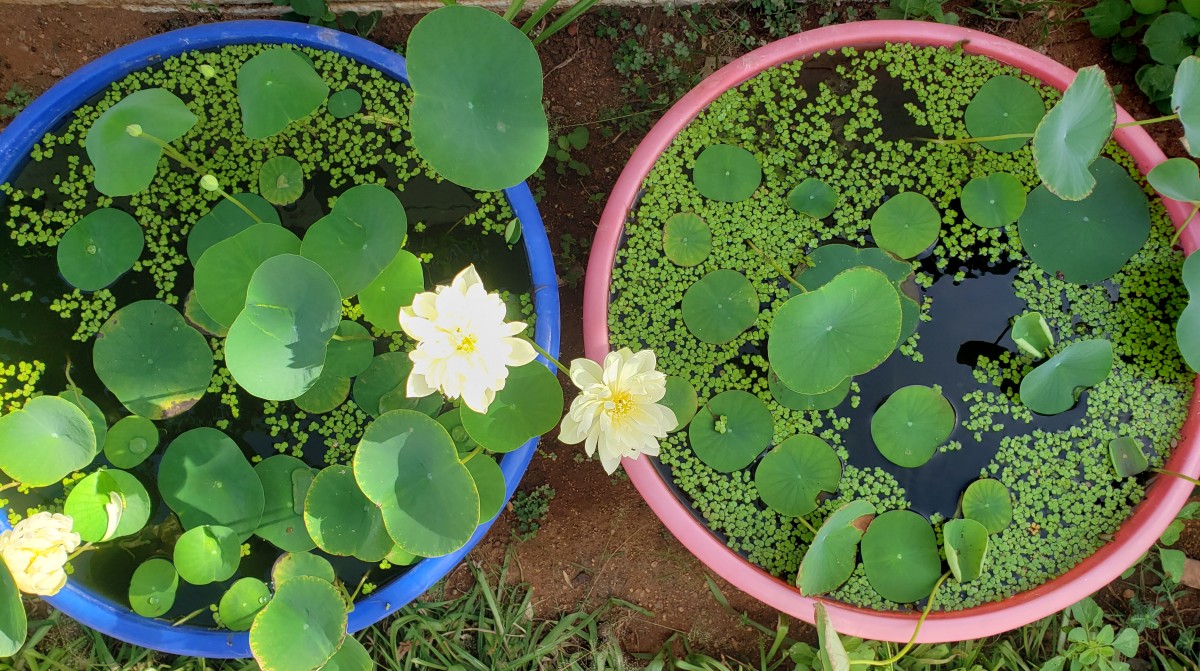
One day, I found fire ants skating over the water surface, using the “skin” provided by the duckweed.2 This infestation of my lotus basins by tropical fire ants was the proverbial last straw that broke the camel’s back.3
Enlisting the power of AIs
I decided to harness the power of free (no cost) AI to defeat the tropical fire ant. My first port of call for help was Google’s AI-powered search feature (sometimes called AI Overviews). Such AI engines can be quite helpful in solving everyday problems, as in this case, helping me to shoo away the tropical fire ants from my garden.
Later on, I sought the help of the more powerful Google Gemini to get a more complete picture of the pest, and an introduction to methods that could better vanquish it.
The dialogue I had with these AIs is a rather convoluted one. Rather than recount that journey in tedious and linear detail, I will start with the solution proposed by the AI—which I adopted—followed by my observations, and comments on how to go forward.
Beauveria bassiana to the rescue
The AI recommended a biocontrol agent, Beauveria bassiana, which is an entomopathogenic fungus. It is an organic toxin that can poison the tropical fire ant, while remaining generally recognized as safe for non-target insects, aquatic life, and humans, making it suitable for organic pest management.
I was told by the AI that applying it as a soil drench would solve my problem.4 When watered down the holes of anthills, it would be carried by worker ants to infect and kill the queen of the colony, solving the problem. With great gusto, I set about following the protocol suggested by the AI.
Application protocol
- Buy Utkarsh Beveros-P Beauveria bassiana5 or a product of similar quality and pedigree from another brand. The package I used is shown in Figure 5.
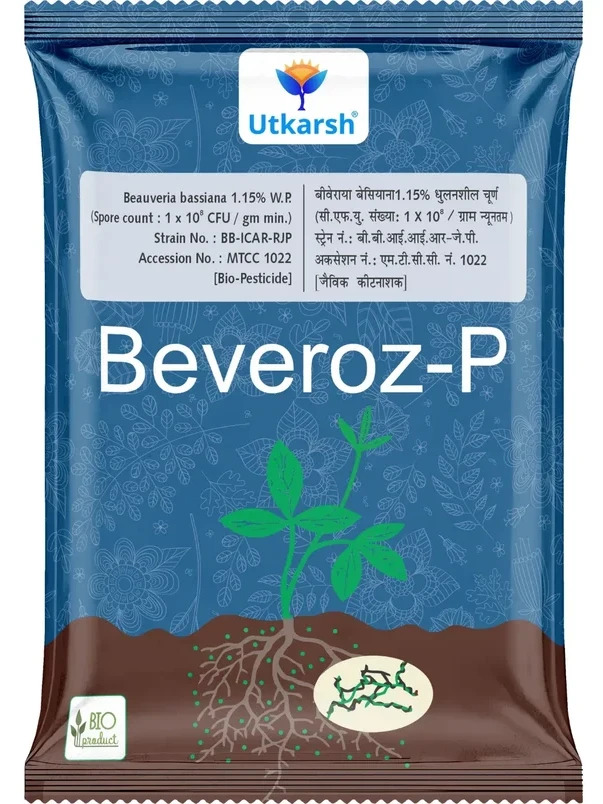
Mix 5 to 10 g (one to two teaspoons) of the powder in 1 L of water. Mix well before application.
Deeply drench the ant holes, ant mounds, and surrounding soil around 18:00, when the sun is just setting, as the fungus does not survive harsh sunlight.
Repeat each week for three weeks to ensure that eggs and larvae are controlled as well.
Observed results
There was a noticeable reduction in the number of ants patrolling the drenched areas. However, they returned within five days to a week. So, the frequency of drenching was increased to twice a week.
With increased frequency of application, the ant mounds generally moved from one to two metres away from their previous locations. But the ants were not decimated but still prevailed.
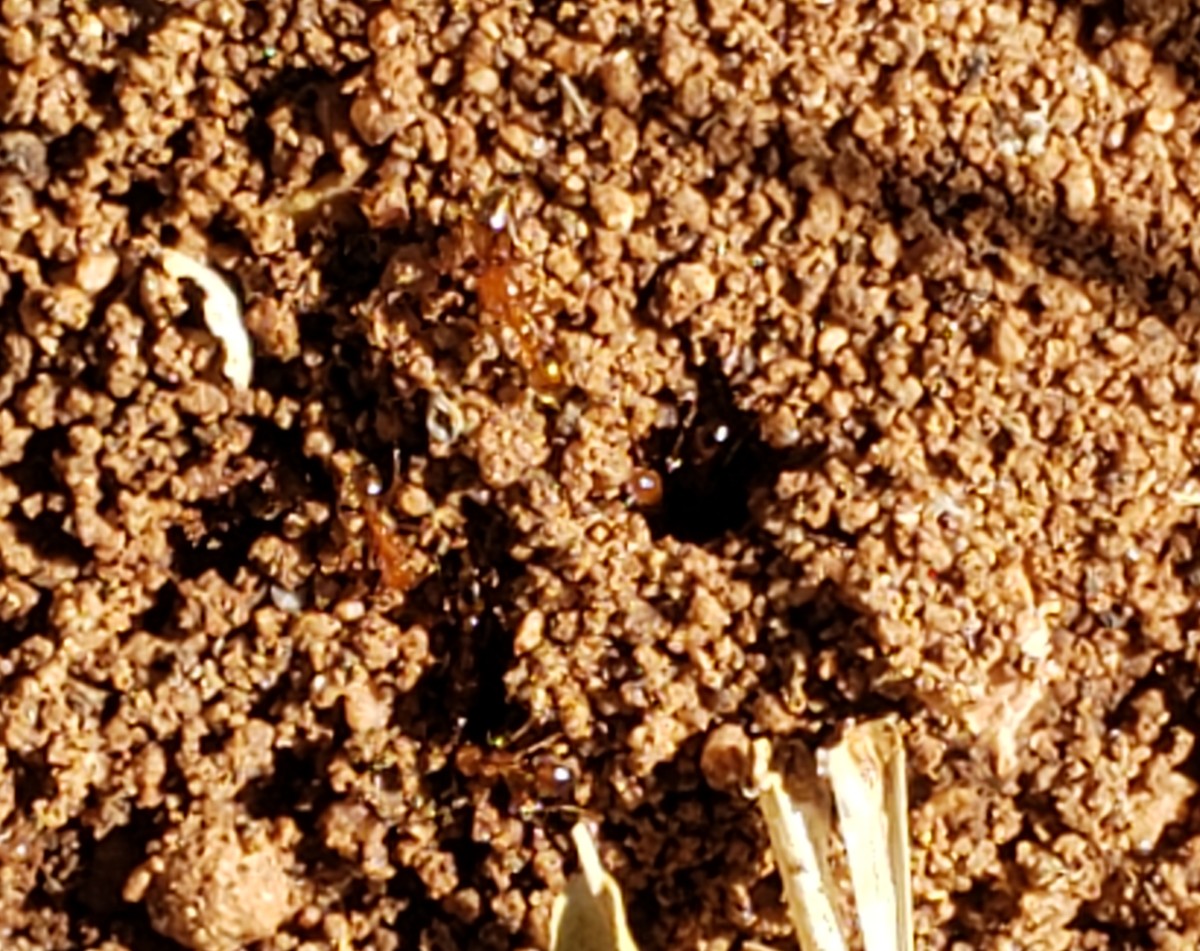
Tropical fire ants can have a subterranean nest connected by tunnels that open out at different places on the ground. Once one opening is attacked, I found that they will open other ant holes as entrances and exits to their nest.
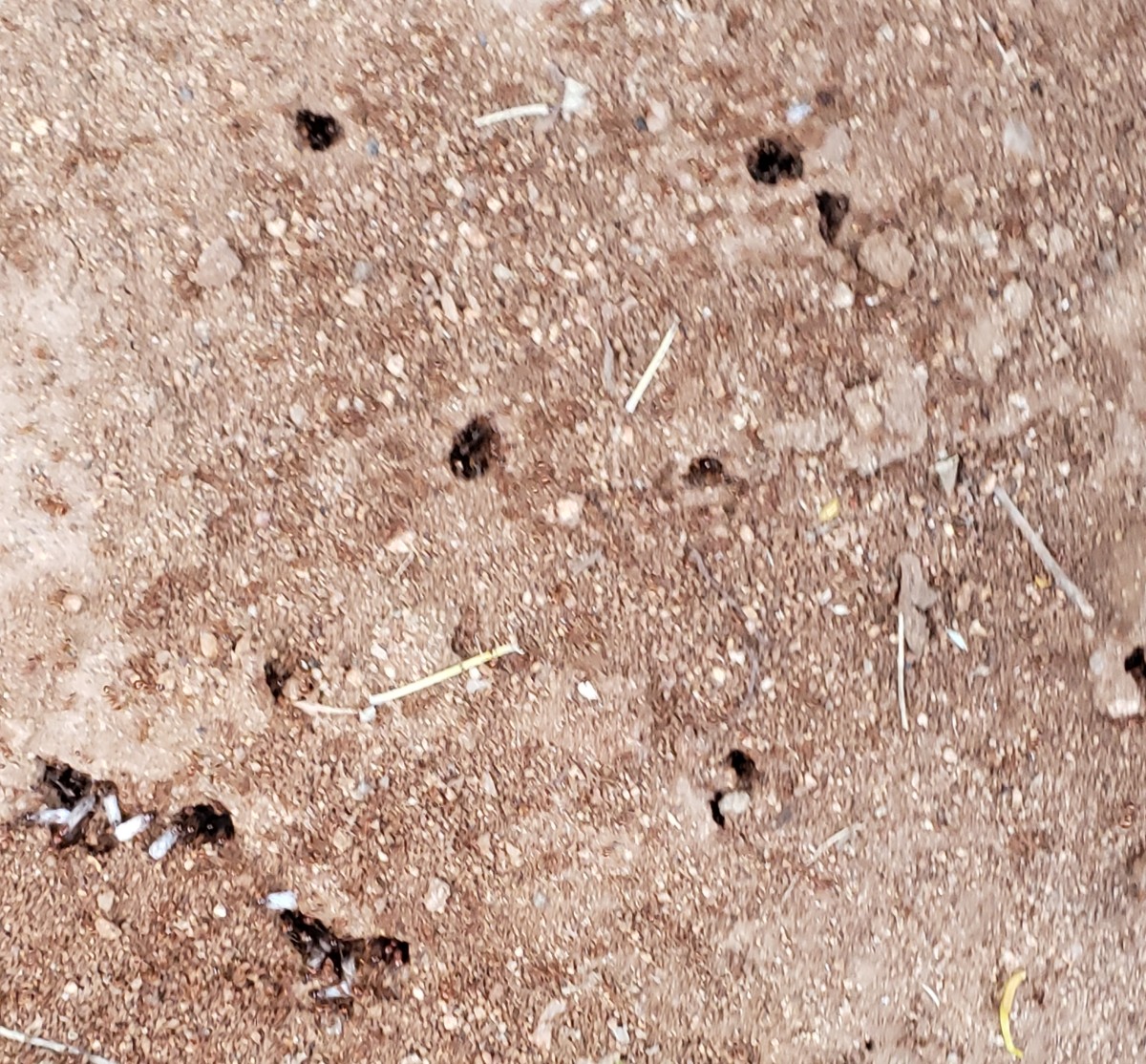
Unintended consequences
Concurrent with the disappearance of the ant mounds from certain areas of my garden, there was an invasion of my home by these little critters. Basically, when the going got tough, the tough got going.
The need for circumspect questions
The sunny disposition displayed by the responses of the AI affected my objectivity. Such sanguinity is characteristic of AIs in general, as I believe that they are programmed to project confidence, by promoting their solutions as definitive, even if there is not enough data to justify it. So, beware of this limitation when using AIs.
Was eradicating the ants merely a possible event, a highly probable event, or a guaranteed outcome? I was not exactly told because I did not ask the AI. How large is a typical colony? Would merely killing those workers who came in contact with fungus be enough? How likely was the queen to be killed? If the queen survived, would I still be left with the problem? In hindsight, I should have asked such questions before carrying out the treatment with such optimism.
Other Impractical solutions
Because AIs are not infallible, several measures initially suggested by the AI were later deemed impractical or ineffective, by the same AI or a more powerful one. Probing an AI with questions to exhaustion is a necessary aspect of due diligence when implementing AI solutions.
To be grounded in reality, and for the sake of completeness, I enumerate two of these false starts below.
Phorid Flies (Pseudacteon species): These were the first suggested biocontrols. But they are not available in India as an agricultural resource, although they are used in the US and Australia. Therefore, a non-starter.
Larger Native Ants (Diacamma rugosum/Queenless Ants): These are natural predators for the tropical fire ant, but their presence will be more by happenstance than design. Also, how many would I need for internecine ant warfare? Impractical to implement in a home garden.
Papers on controlling Solenopsis geminata
As always, measures to control tropical fire ants should be grounded in impeccable, peer-reviewed, published research. Solenopsis geminata has the dubious distinction of being a member of the Global Invasive Species Database.
Despite this, the primary and review literature on Solenopsis geminata is not copious. Nor is the research mature enough for one or more definitive biocontrol methods to be confidently prescribed. Indeed, one survey from 2023 on pest ants states:
Our review shows that, at this stage of knowledge, it is very difficult to extrapolate any result. We offer suggestions to improve and standardize laboratory and field experimental studies in order to advance more efficiently in the fungal control of pest ants. [6]
The virulence of Solenopsis geminata as marauders who lay waste whole plants, and possibly beds of plants, is described thus:
“… this species [is] also found to girdle plants, imbibe sap, and bite branches, shoots, buds, flowers and fruits.” [3]
While synthetic pesticides have been advocated as an effective solution [4, 5], the quest for a sustainable organic solution has not resulted in a definitive biocontrol protocol that may be repeated reliably. This was the red flag that I missed.
The road ahead
The principal biocontrol method for Solenopsis geminata discussed in this blog, uses Beauveria bassiana drenches on the soil around ant mounds and holes. It is at best a temporary, palliative measure. As Macbeth famously says in the eponymous Shakespearean play Macbeth, Act III, Scene 2, “We have scotch’d the snake, not kill’d it.”6 Can we kill the snake, and if so, how?
Spinosad
One means to eradicate the tropical fire ant, suggested by an AI, is to use a solution of Spinosad [7, 8] concocted into a bait with the addition of oil, sugar, and some slurry. When the bait is dutifully carried by workers to the Queen, it leads to her death and the collapse of the colony.
The room for doubt that this method might not be entirely organic,7 and the complexity in its application, did not appeal to me as a hobbyist gardener. However, it holds the attractive prospect of pest eradication that is at a whole new level above the hit-and-run palliative measures talked about in this blog.
Botanicals and essential oils
Perhaps, one light at the end of the tunnel is the forward-looking investigation of botanicals and essential oils as biocontrols by Nalini and Sasinathan [3]. Botanical agents like clove, cinnamon, and coriander powder, and essential oils like peppermint, clove, and eucalyptus are well-researched entities, compatible with organic pest control.
If intensive laboratory and field research is undertaken in the near future, we might well be on the road to organic eradication of the pest Solenopsis geminata. I can already visualize diatomaceous earth impregnated with a cocktail of essential oils as a possibility. 😉
Sunda and Upasunda
In the mythology of Sanātana Dharma there is a curious story of how two demon brothers, Sunda and Upasunda, were cleverly tricked into finishing each other off. Internecine warfare between two matched and related entities is a promising option.
If the search for an insect foe to rival the tropical fire ant is successful, we might well be on the verge of a very promising method of biocontrol.
Or, dare I suggest, could a genetically modified tropical fire ant, that is not a pest to crops, be used to fight to the death its unmodified cousin? The electron-positron annihilation model from Physics comes to mind. But what is the guarantee that it will not backfire by introducing an even worse pest? Research in the life sciences is unimaginably more complex than conducting simple experiments in physics or chemistry.
Subterranean mapping by drones
The advent of low cost drones has opened up the possibility of subterranean mapping using remote sensing. If multi-modal and multi-spectral mapping may be configured to reveal the subterranean nests of tropical fire ants, we could apply targeted means to kill the queen and her whole colony of ants.
Which radiating energies and wavelengths do we use? What is the time-complexity of the processing algorithms? How much area may be mapped in one day? These present-day imponderables must be addressed before a start can be made. But if imagination does not lead the way to a solution, what will?
Key takeaways
The life sciences are notoriously complicated fields for research, when compared with, say, the purely quantitative sciences.
While AIs are useful tools to guide research and suggest solutions, one needs to question the AI exhaustively and be very circumspect in accepting AI-suggested solutions, especially in the life sciences.
Even in the life sciences, getting advice from an AI to, say, persuade a dormant lime tree to bloom and fruit, is a lot more straightforward than getting suggestions to eradicate a colony of social insect pests like the tropical fire ant.
The drenching of soil with a Beauveria bassiana solution, suggested by the AI, is at best a palliative measure that will drive away the ants elsewhere without eradicating them. If that ant exodus takes place from the garden to the home, it is not a worthwhile bargain.
A proper organic solution to the menace of Solenopsis geminata still depends on some definitive research of the future. Let us toast to it.
Acknowledgements
I gratefully acknowledge the encouragement and help given to me by my dear friend, Professor M Muthuraman, retired Professor of Entomology, Tamil Nadu Agricultural University (TNAU).
Feedback
Please email me your comments and corrections.
A PDF version of this article is available for download here:
References
There is another species, Solenopsis invicta, which is called fire ant or red imported fire ant (RIFA). I believe that the variety in Tamil Nadu, India, is Solenopsis geminata but will stand corrected if an expert claims otherwise.↩︎
This was solved by reducing the surface area of the water covered by duckweed so that the ants could not skim the water surface with impunity. I also ensured that there was no overhanging vegetation that could give the fire ants “visa-free” access to my lotus ponds.↩︎
If you want to watch a video on this expression, see The Straw That Broke the Camel’s Back Meaning—The Straw That Broke the Camel’s Back Defined.↩︎
I could almost hear the AI snapping its metaphorical fingers!↩︎
This is a 1.15% wettable powder of Beauveria bassiana with \(1 \times 10^8\) colony-forming units (CFU) per gram minimum from the strain BB-ICAR-RJP with Accession number MCC 1022.↩︎
The Web is full of “scorched” instead of “scotched”, but that is how I remember it from my schooldays.↩︎
Spinosad is derived from bacteria (Saccharopolyspora spinosa), so it is “natural”. But it is processed and concentrated—not a whole-organism product. It is permitted in organic farming in many jurisdictions (US OMRI approved, EU approved), so it can legitimately be called “organic” in those contexts.↩︎